Integrating Equity into Health Information Systems (HIS) in conflict-affected areas of Myanmar
This story is part of a series highlighting the work of Equity Initiative (EI) Fellows during the Community Building phase of the Equity Initiative program- a lifelong commitment to advancing health equity across Southeast Asia and China. Through CMB Foundation/EI grants like the Community Building Fund, Fellows lead innovative, locally grounded solutions that address pressing social and health challenges.
|
Community Building Fund Project Snapshot CMB/Equity Initiative Fellow: Sharon Low (2018, Singapore), May Sripatanaskul (2018, Thailand), and Naw Pue Pue Mhote (2022, Myanmar) Implemented by: Arq by Allyvate Limited (formerly known as The Knowledge House) in partnership with LUKKID Group, Burma Medical Association, Mae Tao Clinic, and Back Pack Health Worker Team Challenge: Without a shared but decentralized data infrastructure, ethnic and community-based health organizations (EHOs/ECBHOs) working inside conflict-affected Myanmar could not compare health trends across regions, coordinate responses to outbreaks, or present community needs to donors and policymakers. "Even when data reached Thailand, it was used mostly for donor reporting rather than for planning services or responding to health needs on the ground. Fragmented funding deepened the problem, as different NGOs supported different organizations with different reporting requirements, pulling partners away from collective priorities. Over time, this fragmentation eroded collaboration, leaving communities without the coordinated evidence base they needed to advocate for resources and plan services on their own terms. Solution: Through a three-year Fellow-led initiative, HISWG was redesigned from a loose coordination body into an active platform for shared ownership. Using human-centered design, the team piloted facility-level HIS hubs in eight clinics, enabling local data entry and joint planning. But the most important change was relational - working together on the HIS created space for joint problem-solving, open communication, and shared accountability. Impact: What began as a modest pilot across one EHO and one ECBHO for eight clinics across four townships grew to 32 clinics across seven townships, spanning three EHOs and three ECBHOs. Collaboration expanded to include Karenni and Shan EHOs which was previously outside the scope of this grant. In 2025, HISWG secured additional funding for its first full-time HIS team and renewed a donor partnership for a system-wide capacity review - both firsts for a network that operated for over twenty years on the voluntary efforts of members managing HIS tasks alongside their full-time roles.. Location: Mae Sot, Thailand, Karen, Karenni and Shan States, Myanmar |
The Health Information Systems Working Group (HISWG) was established in 2002, bringing together ethnic health organizations (EHOs) and ethnic community-based health organizations (ECBHOs) along the Thai-Burma border. Its central aim was to standardize how health data was collected so it could be compared across organizations, used in patient care, and applied to better decision-making. For communities scattered across conflict zones and remote regions — many of them displaced, with limited access to formal systems — this coordination was essential. It helped them understand what their communities needed, what resources were available, and where support was lacking.
But collecting data is different from sharing it. In these settings, health data is sensitive because it can reveal where people live, how vulnerable they are, and what services they can access. "Data is currency, so they are generally use as a form of trade for funding and survival," says CMB/EI Fellow Sharon Low (2018, Singapore). Even when data reached Thailand, it served mostly as donor reporting rather than as a tool for planning services or responding to health needs. When the country began transitioning toward civilian government in 2011, the landscape shifted. Institutional funding moved inside the country. Health services that had once been coordinated were increasingly funded by different NGOs operating from within Burma, each focused on its own township-level plans. The shared purpose that had held HISWG together was pulled in different directions by new partners and changing priorities.
This was the context when CMB/EI fellows connected with HISWG to apply for the Community Building Fund. The intent was not to create something new but to provide a data backbone for EHOs and ECBHOs seeking to build ethnic health systems that could function alongside Myanmar's national health infrastructure. Sharon, working through Arq by Allyvate Limited - formerly The Knowledge House (now focusing on work in Afghanistan), both of which she co-founded - partnered with long-standing border organizations including the Burma Medical Association (BMA), and Karen Department of Health and Welfare (KDHW). Together, they set out to refresh HISWG's purpose and operations, encourage genuine ownership among members, and rebuild trust at every level, from community health workers to international donors. CMB/EI Senior Fellow May Sripatanaskul (2018, Thailand), CEO of design consultancy LUKKID, helped guide the process using human-centered design - supporting partners as they worked out not just what the network should do, but how it should work together.
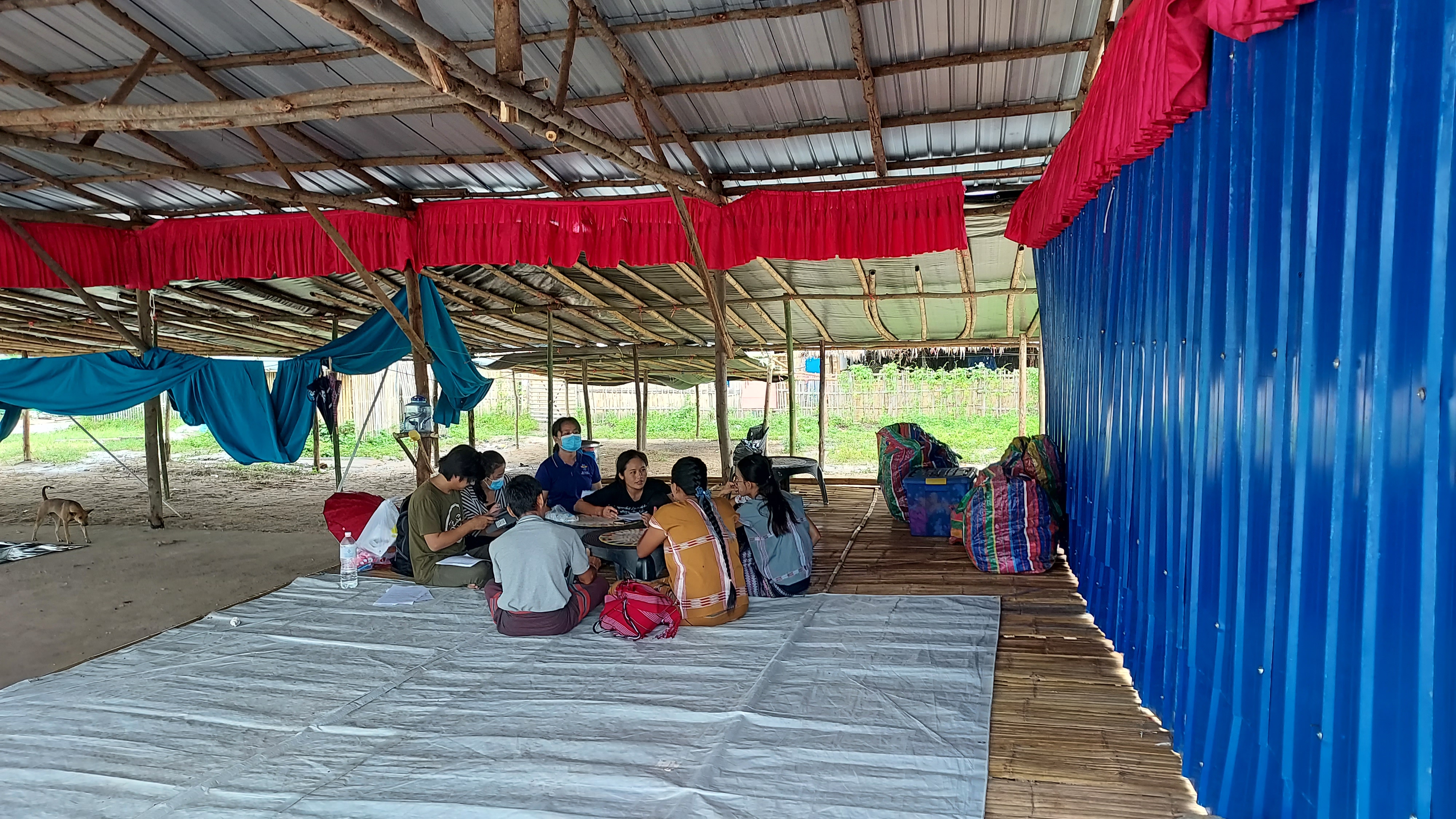
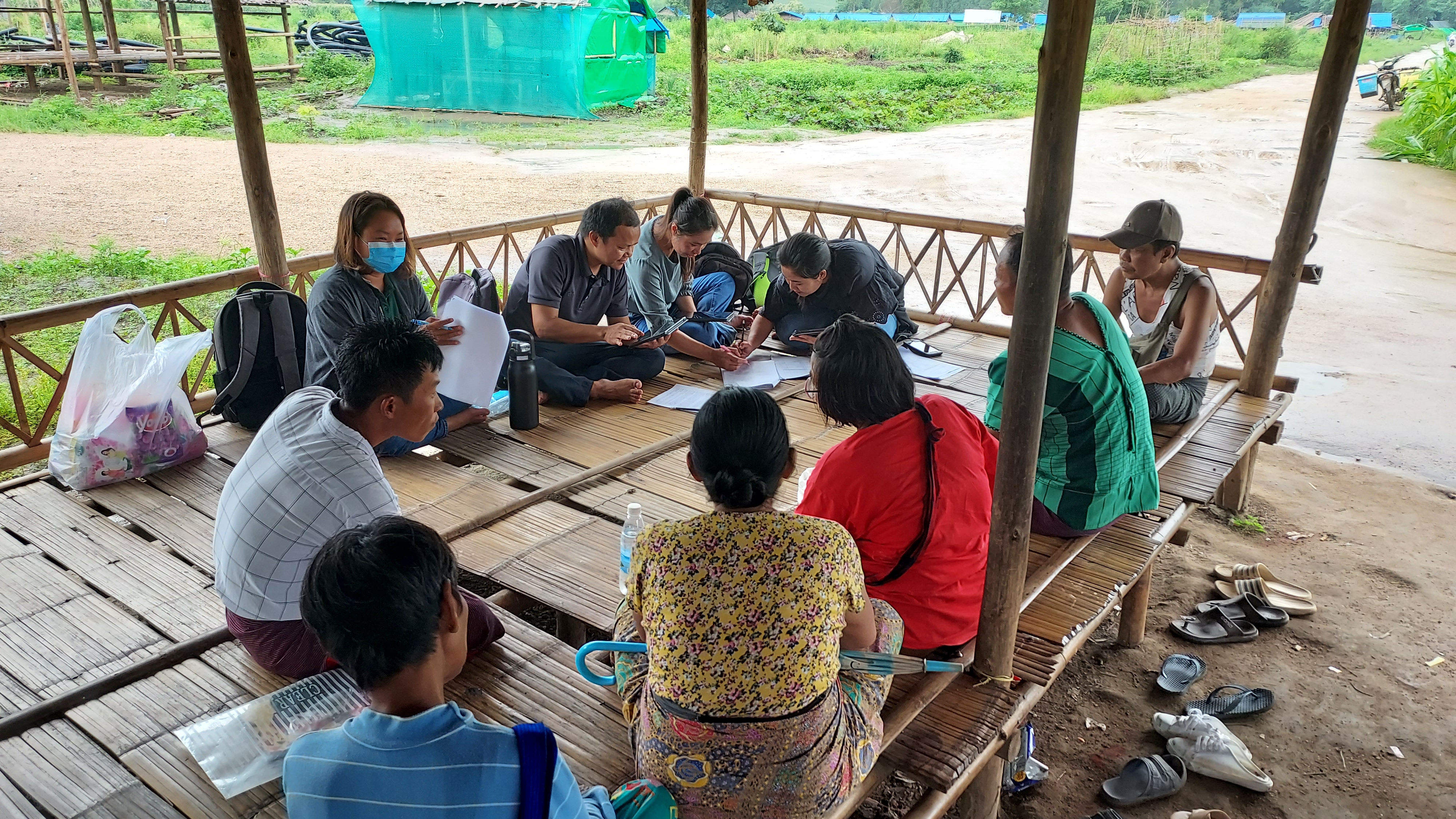
Discussion happening between those residing near the Thai-Burma border
The practical challenges were just as significant. "The first step is to reduce the number of papers and improve data literacy before we can think about digitalization," Sharon noted. "Otherwise, the health workers will be overwhelmed and confused." For HISWG members, most based along the Thailand-Myanmar border (Mae Sot, Sangkaburi, Chiangmai and Mae Hong Son), the difficulty has been not just collecting data but making it useful - and keeping the process manageable for those doing the work on the ground.
The network continues to build data literacy and strengthen data use among health workers, but there is still much to do: training the next generation of HIS staff, strengthening systems, and sustaining collaboration across borders. As Sharon reflects, "Enabling change is not about pushing a system forward. It is about creating conditions for people to move together, at a pace that feels possible for them. Once we shifted our approach, the energy and ownership came from the partners themselves." While the journey toward a shared but decentralized system is far from complete, the initial investment gave HISWG the confidence and legitimacy to take bigger steps.
That progress is now translating into concrete milestones. In 2025, HISWG is renewing its partnership with a long-term donor to conduct a system-wide capacity review across all members and has secured funding to establish a small full-time HIS team — a first for a network that operated for over twenty years without dedicated staff, relying instead on honorary members who managed HIS responsibilities alongside their full-time roles within their own organizations. HISWG is also expanding its collaboration with Thai research institutions and universities, co-bidding for international grants to advance cross-border data initiatives.
Call to action: To learn more about the Equity Initiative and how you can become part of this community, see here.