Global Exchange: Learning from Kenya's Living History
The 2026 CMB/EI Fellows gathered in Nairobi, Kenya from May 1-8, 2026 for the second module of the Equity Initiative's fellowship year: Global Exchange. It was a week designed to move learning beyond their home contexts and into a different set of questions about community power, health systems, and colonial history.
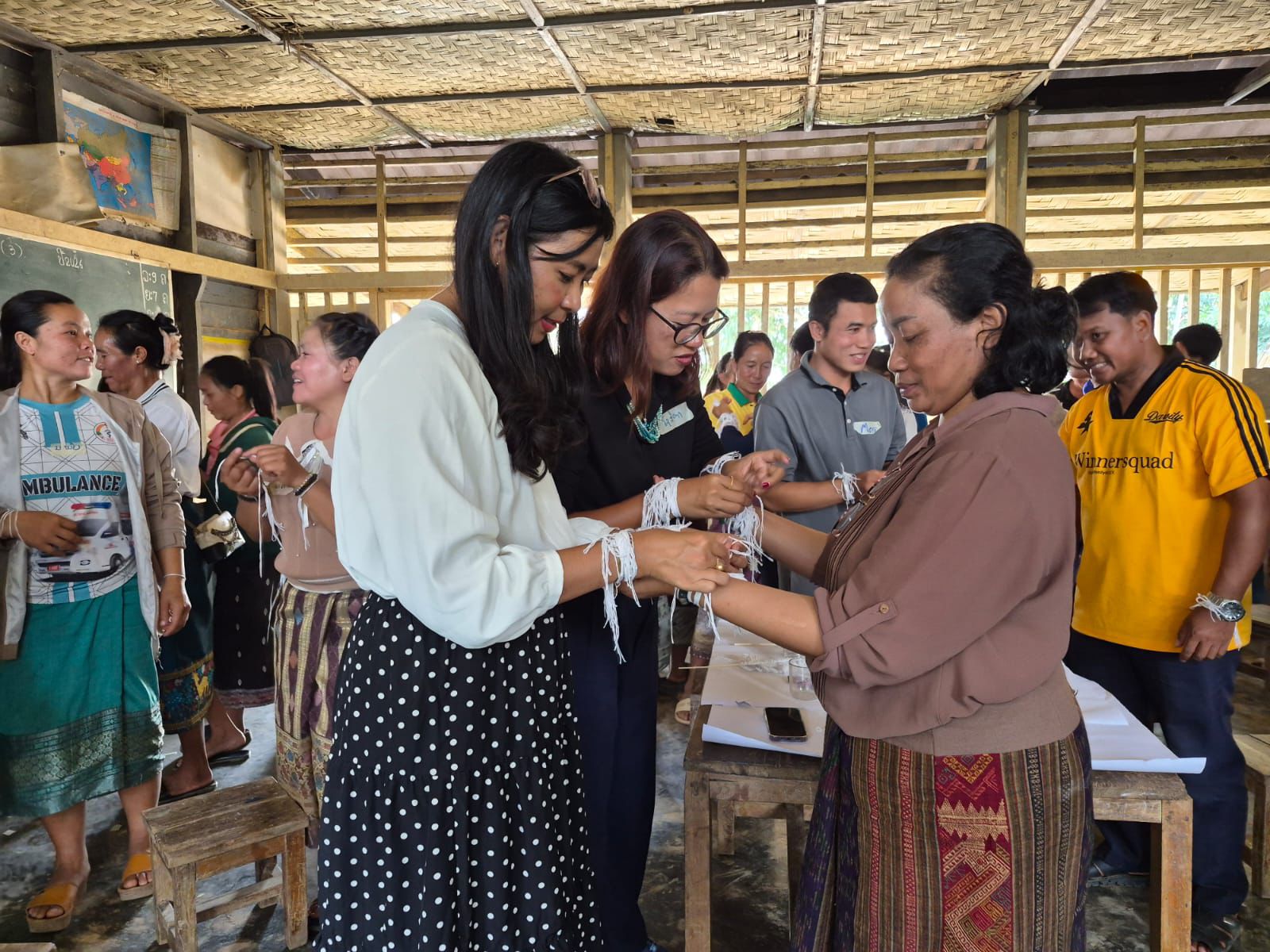
The week began with Sara Mitaru-Kimanthi, an Emmy-nominated artist and social impact advocate who welcomed Fellows to Kenya with song and beaded gifts made by Maasai women.
Who Colonized You?
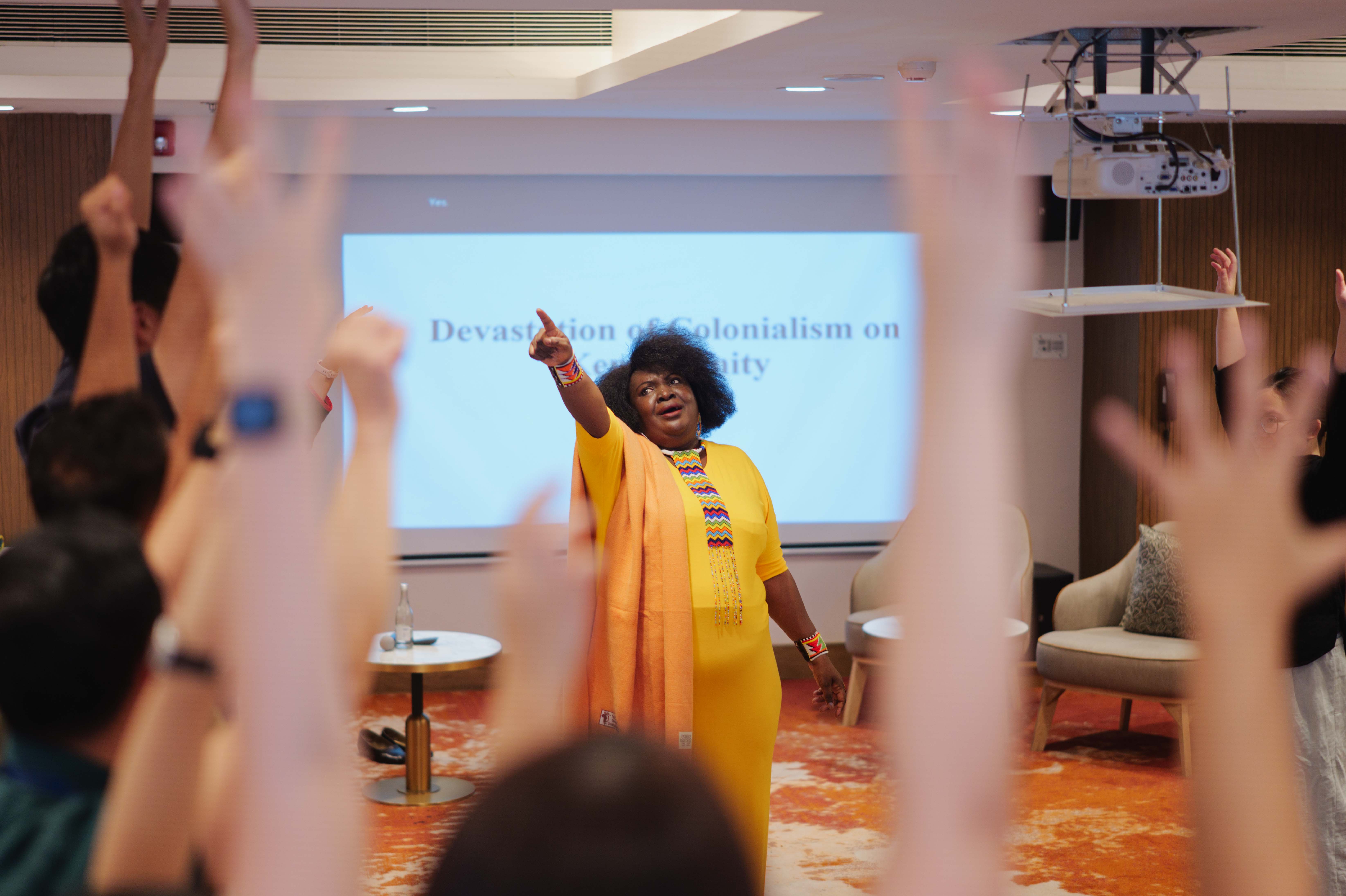
"Who colonized you?" Pan-African feminist Mildred Ngesa opens her session with a question that reverberates across the room
Pan-African feminist and truth-teller Mildred Ngesa began her session by asking Fellows to remove their shoes, to honor the ancestors and the land they stood on, then asked a single question: who colonized you? The answers came quickly from across the room. Mildred traced how the Berlin Conference of 1884 divided a continent without African consent and how those structures persist today – in currencies controlled from Paris, in the English that Fellows spoke but had never chosen.
Thanasak Thumbuntu (2026, Thailand) reflected: "We are all colonized in some way, sometimes visibly, sometimes imperceptibly. There is no way to free ourselves from within an environment already shaped by those influences. Only by seeing things with our own fresh eyes and trusting our own wisdom can our true identity emerge."
Safari at Dawn

2026 CMB/EI Fellows take in the landscape at Nairobi National Park during an early-morning safari — one of the world's only urban wildlife reserves.
Early the next morning, Fellows rose before the sun for a safari at Nairobi National Park, one of the world's only urban wildlife reserves. The experience encouraged a different kind of attention as wildlife roamed on contested land at the edge of a capital still negotiating its colonial inheritance.
Redesigning Health Systems
Dr. Meshack Ndirangu Wanjuki, Country Director of Amref Health Africa in Kenya, mapped Kenya's stark county-level health inequities and a primary care system held together by Community Health Promoters. The system, as Dr. Wanjuki put it, was built to treat illness. It must now be redesigned to manufacture health.
Into Kibera
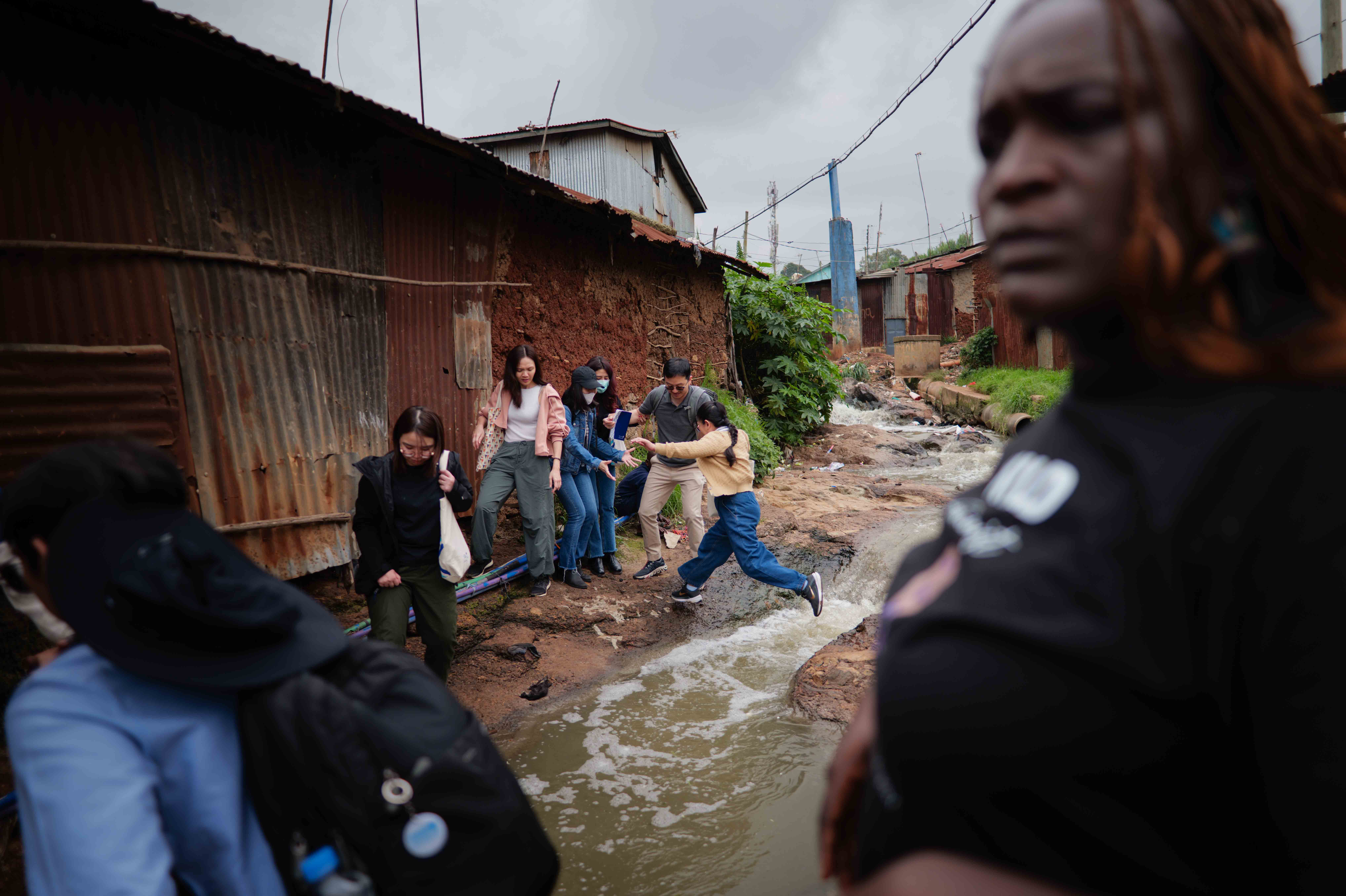
Fellows navigate the river running through Kibera, guided by community leader Edita Achieng — whose team fills the gap where the state is absent.
Ramadhan Karali of Nubin Magazine gave Fellows the community's own account of Kibera's origins: Nubian soldiers settled after British colonial military service on land never formally granted to them. Kibera (meaning "forest" in Nubian) was not informal by choice but by design — the result of decisions made far away, by people never accountable to the communities they shaped.
The connections that made this visit possible came through Saida Ali, an Atlantic Fellow for Social and Economic Equity and intersectional feminist strategist based in Nairobi — a reminder that the Atlantic Fellows network itself is a resource for cross-regional learning and solidarity. Fellows moved through Kibera in groups with FPRJC and Nivishe Foundation. They met Edita Achieng, executive director of FPRJC, whose team acts as community police when the state is absent, and Emily, who has guarded a community toilet for ten years while water cartels price clean water out of reach. They saw FemPads being made by hand — livelihood and dignity at once.
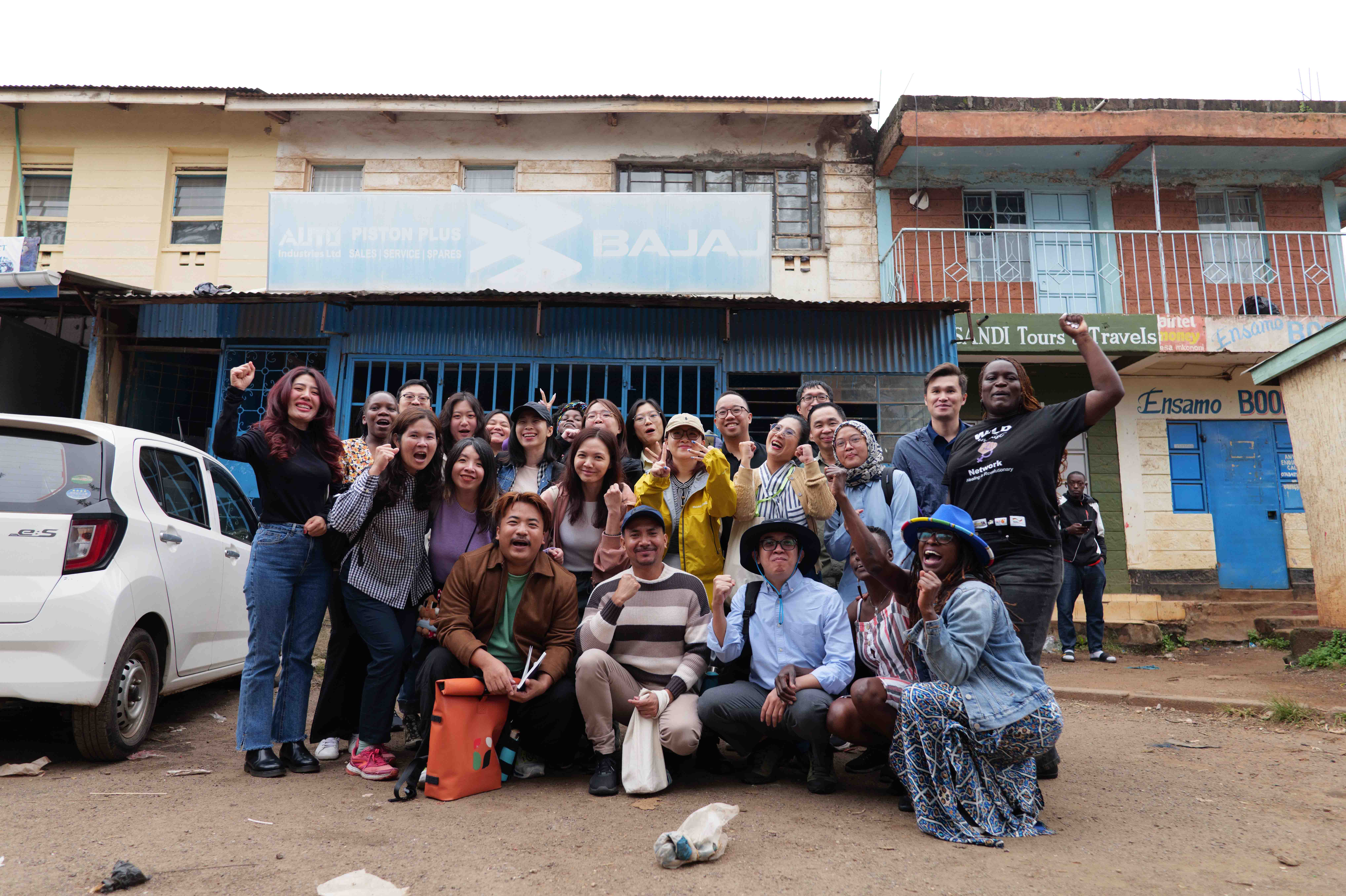
Fellows gather in Kibera with local guides and community members during a visit organized through the FPRJC and Nivishe Foundation.
At Nivishe Foundation, young mothers asked whether the same things happened in the Fellows' countries. Adolescent girls in a school mental health program spoke about stress, early marriage, and their ambitions. What struck Fellows was not absence but presence: people actively building alternatives. Socheat Nhip (2026, Cambodia) described what this reframed for her: "At first glance, many outsiders may see these communities as lacking resources and in need of support. While material needs and fragile systems are real, what stood out to me most was not weakness, but strength. The people I met were not waiting passively for solutions; they were actively leading conversations, building networks of support, and fighting against unjust systems that continue to marginalize them." Wirada Saelim (2026, Thailand) connected what she witnessed to the frameworks she had carried in: "My time learning from activists in Kenya deepened my understanding that decolonization and feminism aren't just theories, but tools for self-discovery and reclaiming our own narratives. For these perspectives to be truly impactful in our work, we must identify what they look like — and even feel like — within our unique Southeast Asian context."
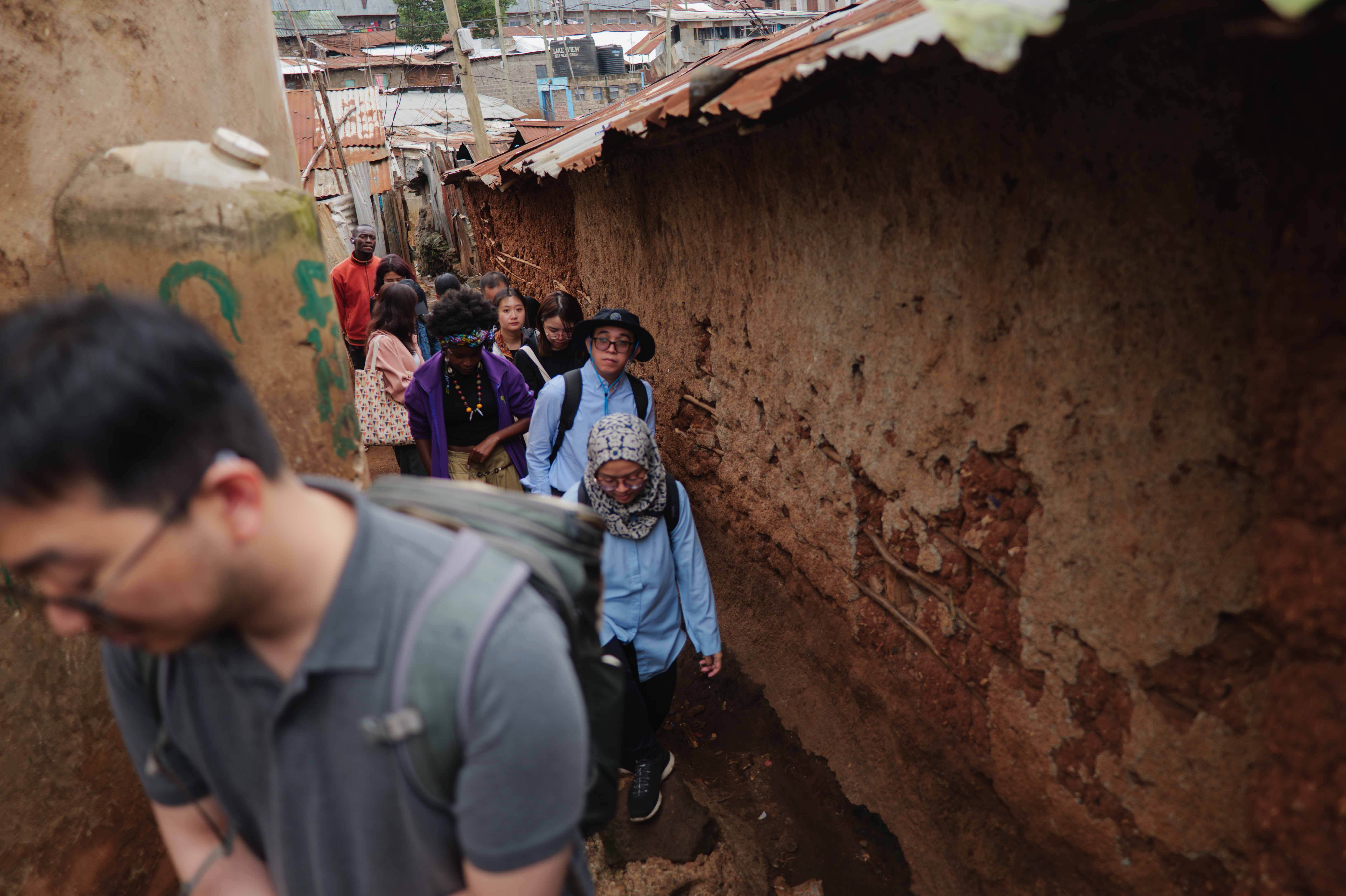
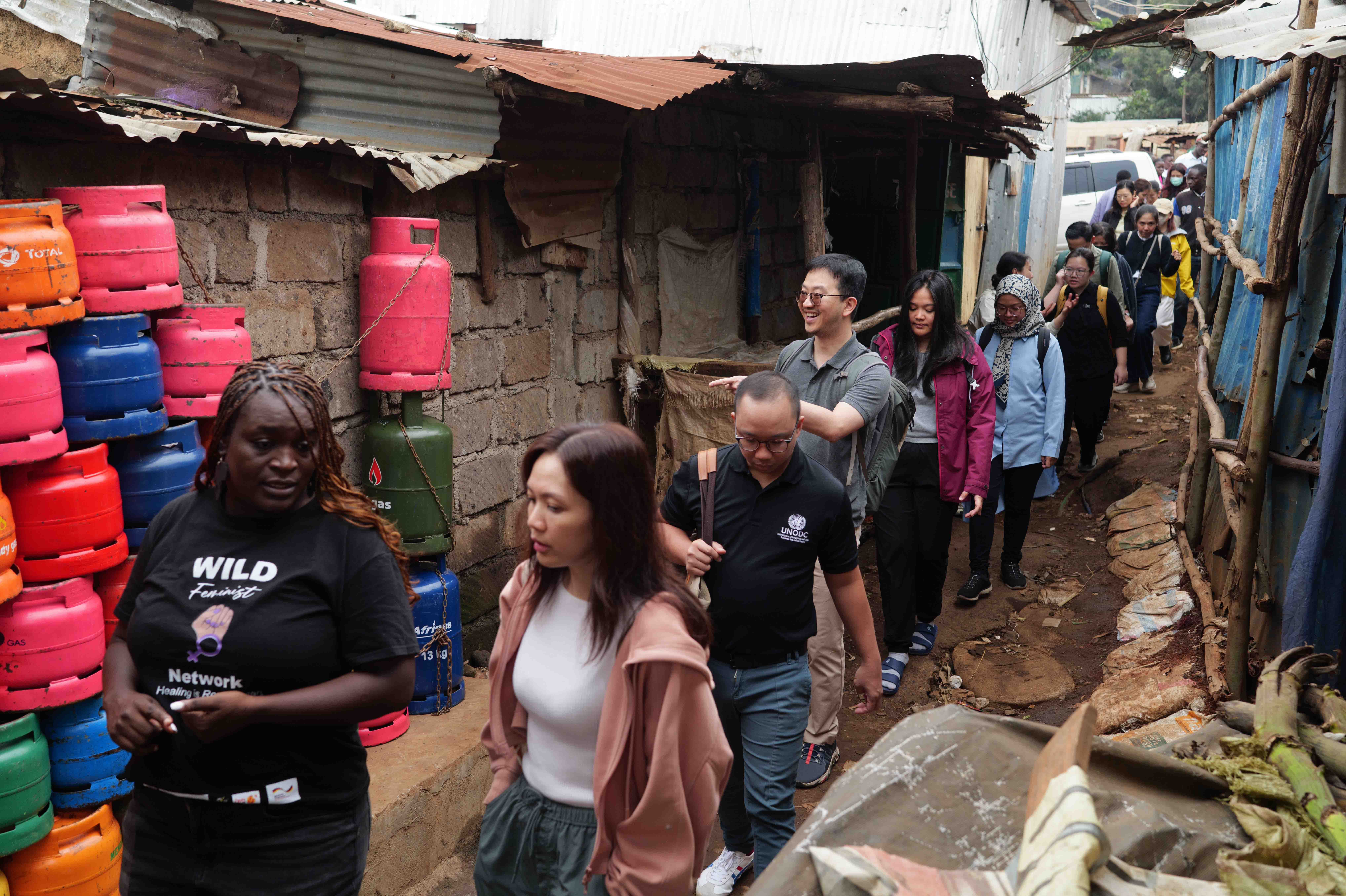
Fellows make their way through the lanes of an informal settlement, deepening their understanding of the conditions shaping health equity on the ground.
Sarah Hague of UNICEF reframed what Fellows had seen through a policy lens — social protection not as a safety net, but as a strategic investment in equity. Then Mildred Ngesa returned to close what she had opened. Fellows spoke about structural failure and community strength, about gender and power, about how the government had abandoned Kibera and how the women they met had refused to accept that abandonment as the final word. They also spoke about what the week had surfaced in themselves — their own histories, the wounds they carried into equity work, the distance between the change they wanted to make and the inner work that change required.
Frontline Care
Korogocho Health Centre, a public primary health facility serving around 45,000 people, extended the week's inquiry into another informal settlement context.
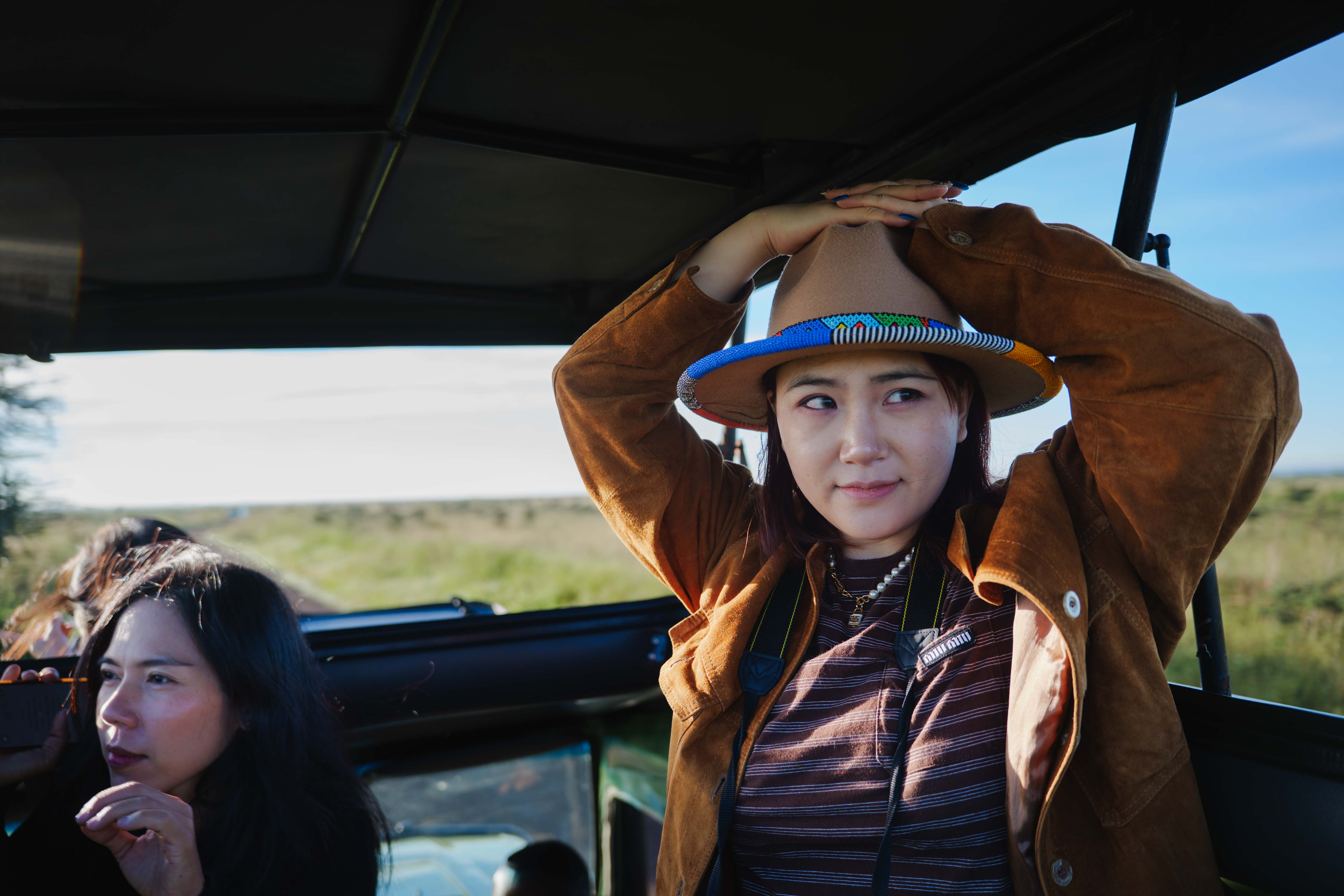
A moment of reflection during the dawn safari at Nairobi National Park.
Peng Linqian (2026, China) observed: "What this experience revealed is not simply a story of scarcity, but a dynamic system of survival, adaptation, and care. Health equity here is not an abstract concept — it is negotiated daily through informal networks, overstretched public systems, and community resilience." Dr. Stellah Wairimu Bosire — feminist, medical doctor, and lawyer — pushed the lens further, challenging Fellows to ask whose realities are designed out of health systems entirely, and how power, gender, and civic space determine who receives care and on what terms.
Learning From and With Each Other
Fellows took turns facilitating debriefs, guiding reflections, and shaping discussions throughout the week. A Human-Centered Design workshop run by Dr. Daniel Kwaro and Dr. Catherine Kidiga of Buni Banda channeled everything the week had surfaced into Second Year Projects: mental health support for displaced communities, participatory storytelling to surface hidden health inequities, data systems to make invisible populations visible.
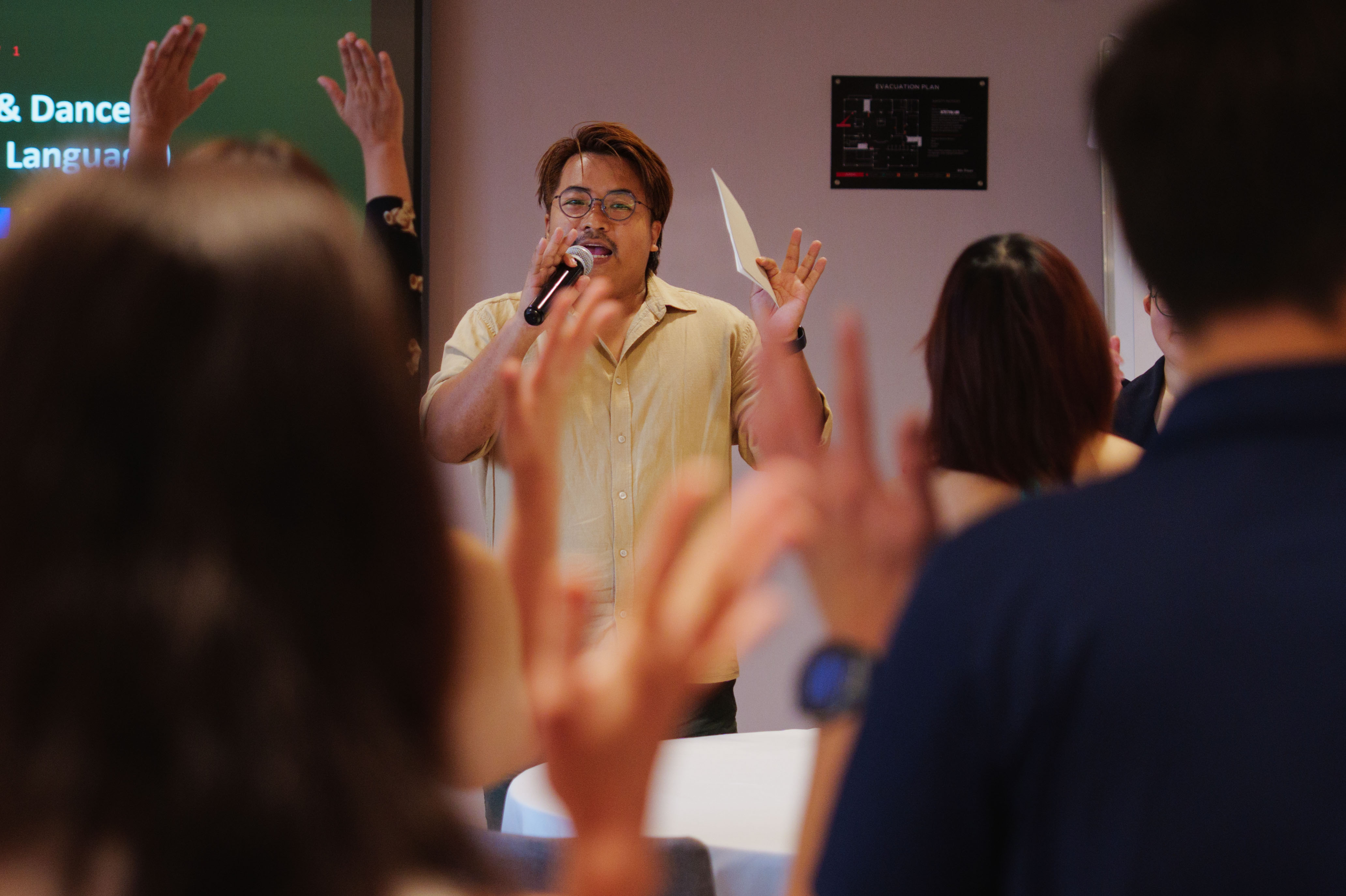
Henry Za Lal Lian (2026, Thailand) leads Fellows through the closing debrief on the final morning of Global Exchange.
On the final morning, Thanasak Thumbuntu (2026, Thailand) and Henry Za Lal Lian (2026, Myanmar) led the closing debrief — moving from collective reflection into an energetic quiz, a reminder that Fellows had become capable of leading one another through complexity.
Wirada Saelim (2026, Thailand) named what the week had given them: "At the start of the week, you gave us the framework — the eyes to understand Africa, Kenya, Kibera through the lens of decolonization and justice. That is about understanding what happens outside of us. Today, the key takeaway is that it is a framework for the work within. We cannot love others better if we don't learn how to love ourselves. These two are intertwined. You cannot separate them."
Fellows left Nairobi having learned to look differently: at power, at history, at health systems, at the communities their work is meant to serve, and at themselves.